Brigids
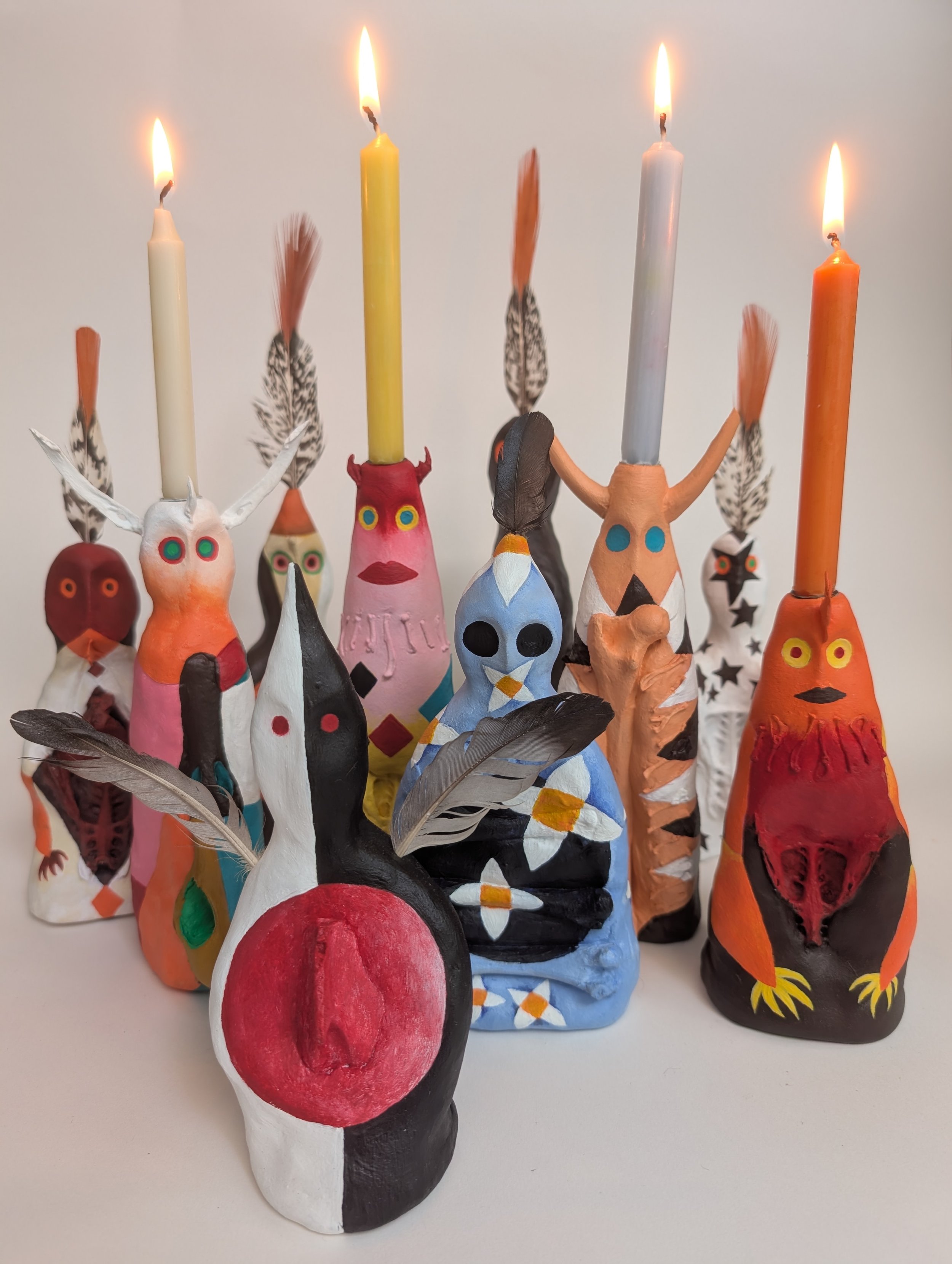
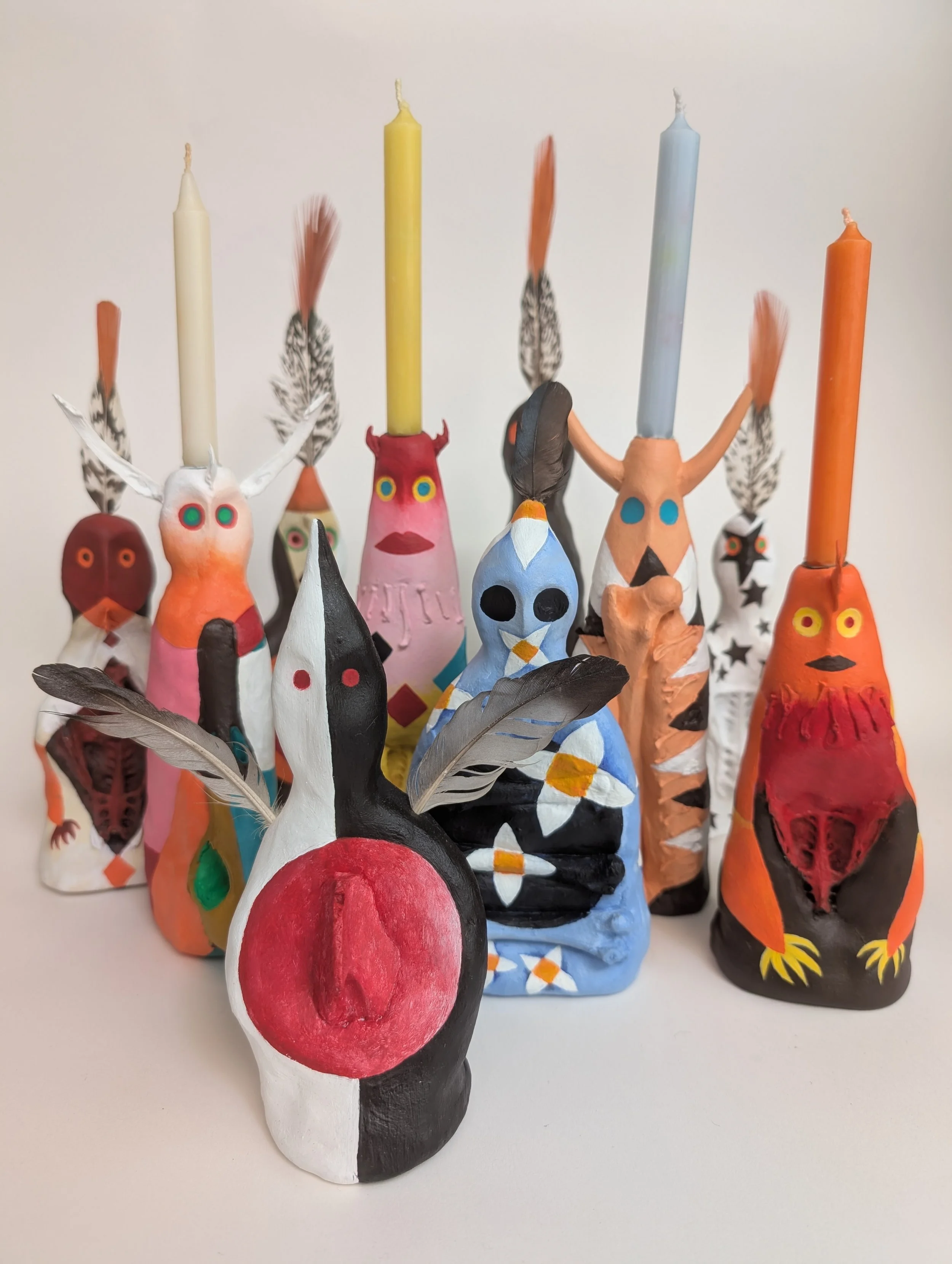
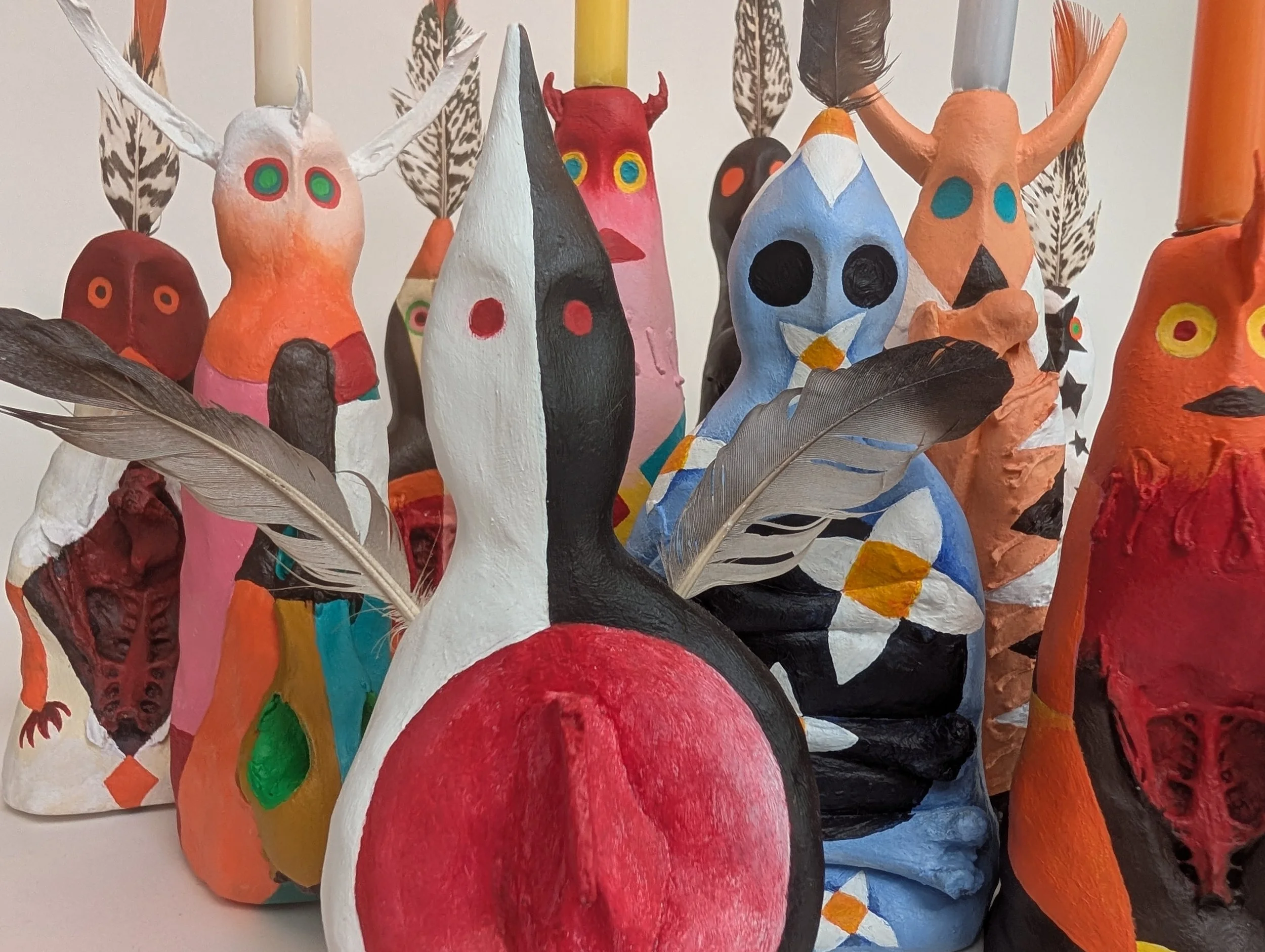
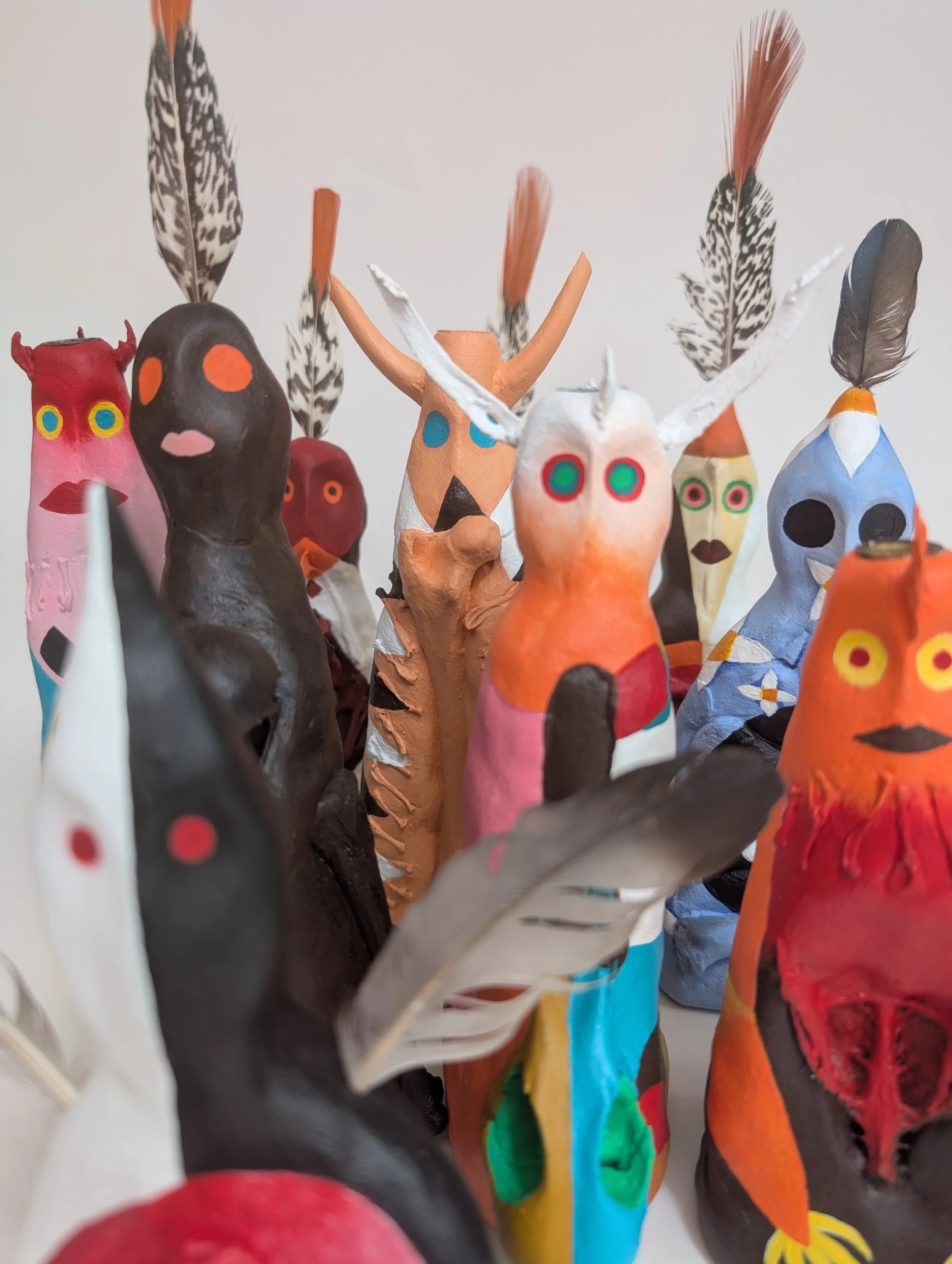
Brigids is a set of ten small statuettes based on Brigid dolls. These figures, called Brídeógs in Irish, are traditionally made from straw, rushes or corn and fabric, as a way of celebrating the annual festival of Imbolc, which marks the return of spring, and typically falls around February 1st in the Northern Hemisphere, as a midpoint between winter solstice (or Yule) and spring equinox (Ostara or Easter).
Imbolc is strongly associated with Saint Brigid or Brigid of Kildare, the patroness saint of Ireland, where Imbolc is accordingly also known as Saint Brigid’s Day, although it is believed that the festival has pre-Christian origins which may date back to the Neolithic. It is similarly thought that the figure of Saint Brigid was produced by syncretisation with Brigid or Brigit, a goddess of pre-Christian Ireland who was associated with poetry, healing, and smithing.
Some speculate that there may be a further relation to the British Celtic goddess Brigantia, tutelary deity of the Brigantes, but this is disputed, not least because Brigantia is more strongly associated with victory and the sea, like the Gaulish goddess Belisama, which is why Brigantia later came to be represented using the borrowed characteristics of the Roman goddesses Victoria and Minerva.
By contrast, Brigid is traditionally characterised as a poet-seer goddess, with two sisters of the same name, dedicated respectively to healing and smithing. Due to her association with the return of spring, she is strongly associated with the sun and fire, so that lamps and candles are typically used in depictions of her and in associated rituals and ceremonies. She is additionally associated with livestock, and often pictured with her two oxen, Fea and Femen. Brigid is also associated with holy wells located in both Ireland and Britain. In Ireland, where many places carry Brigid’s name in some form, these wells are traditionally visited at Imbolc. Both Saint Brigid and the goddess Brigid were said to have links to fire and thermal springs, and to be able to control the weather, multiply food, and bestow livestock.
Outside of Ireland, Brigid also appears in Haitian Vodou, and is represented in the Scottish place names of East and West Kilbride, a number of places in Wales, and in historic carvings and frescoes in Glastonbury, as well as in the names of locations in the Americas, Germany, and Antarctica. The figure of Brigid has also been claimed in recent years as a popular feminine deity in contemporary Ireland and in a variety of modern pagan religions internationally, which some scholars feel has exaggerated the significance that the goddess would traditionally have held. This perspective is likely valid, given the decision in 1985 to name a tholus on Venus for the goddess Brigid, and the creation in 2023 of Saint Brigid’s Day and Imbolc as an annual public holiday in Ireland.
These statuettes represent Brigid in a wide, colourful variety of forms as a way of reflecting the vast scope of the associations this goddess has accrued, particularly with brightness, flowers, water, seasonal shifts, flight, outer space, and fire, as several of the figures hold candles, or are decorated with foraged bird bones and feathers.
The forms of these statuettes were also inspired by Alexander Girard’s Wooden Dolls, designed in 1952 as a family of diverse animal, human, and mystical characters, which were themselves a tribute to the traditions of the folk arts that he and his wife Susan Girard collected and later donated to the Museum of International Folk Art in Santa Fe. Meanwhile, Girard’s Wooden Dolls are still reproduced by the Vitra Design Museum, based in Germany.
Brigids are intended to be used in a cluster to observe the yearly festival of Imbolc at the start of February, in its traditional association with the coming of spring, and to represent the significance of the ancient and enduring goddess figure of Brigid, as her character continues to expand and evolve.
Jennie Cole, Brigids
2026
Mixed media
A set of ten statuettes.
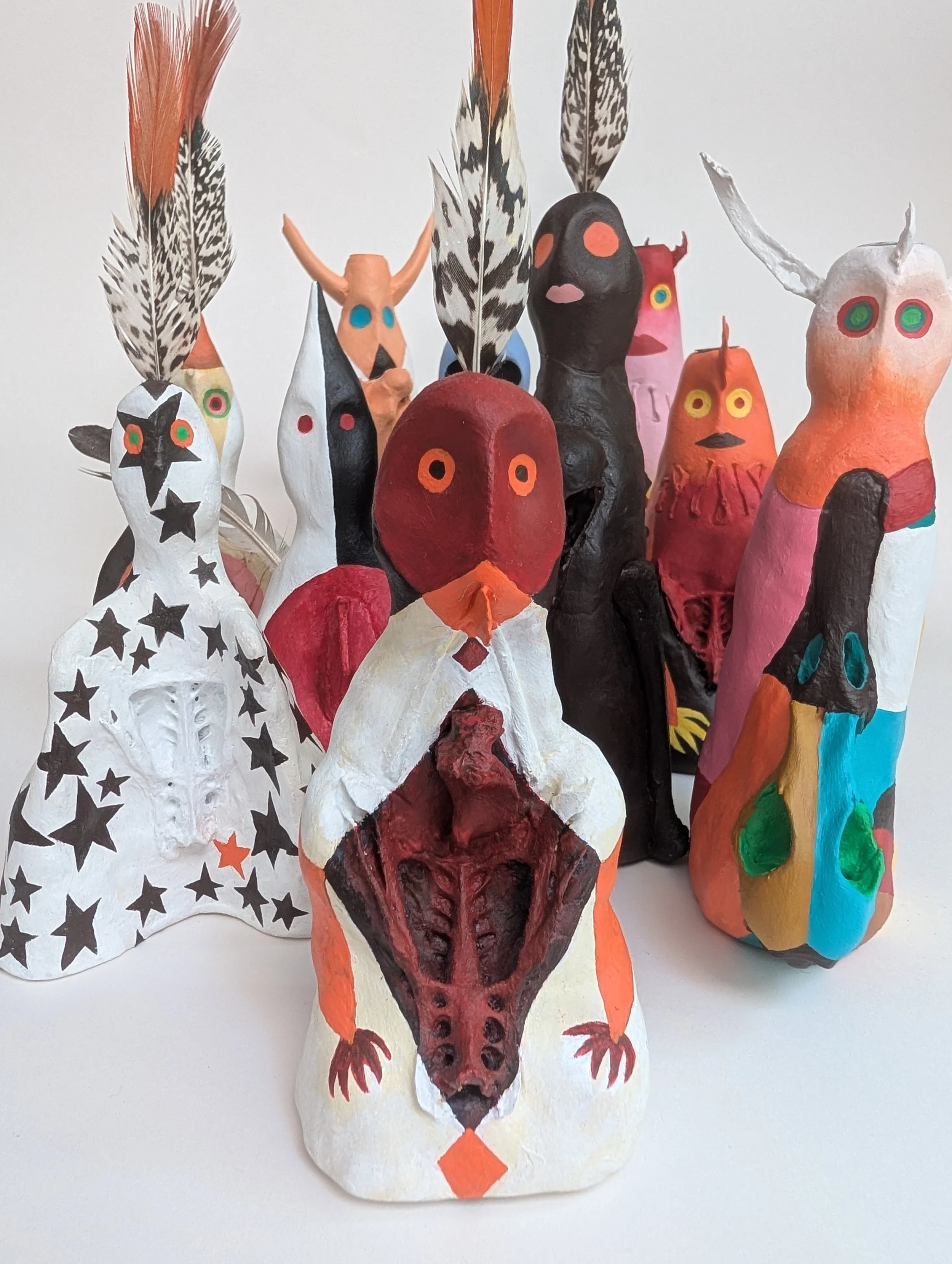
Jennie Cole, Brigid I
2026
Clay, foraged bone, feather, acrylic paint
22.5 × 6.7 × 6 cm
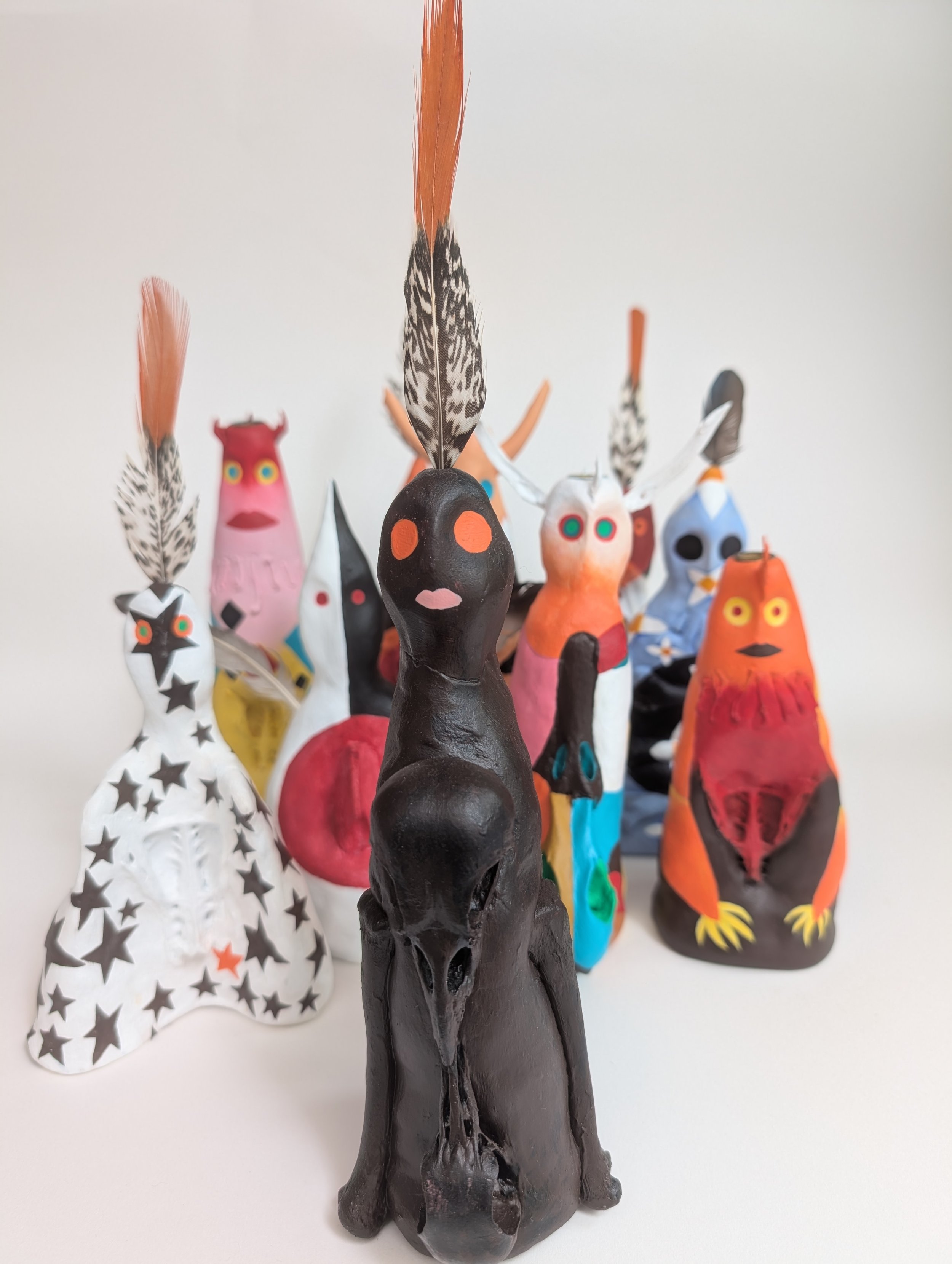
Jennie Cole, Brigid II
2026
Clay, foraged bone, feather, acrylic paint
30 × 7 × 7 cm
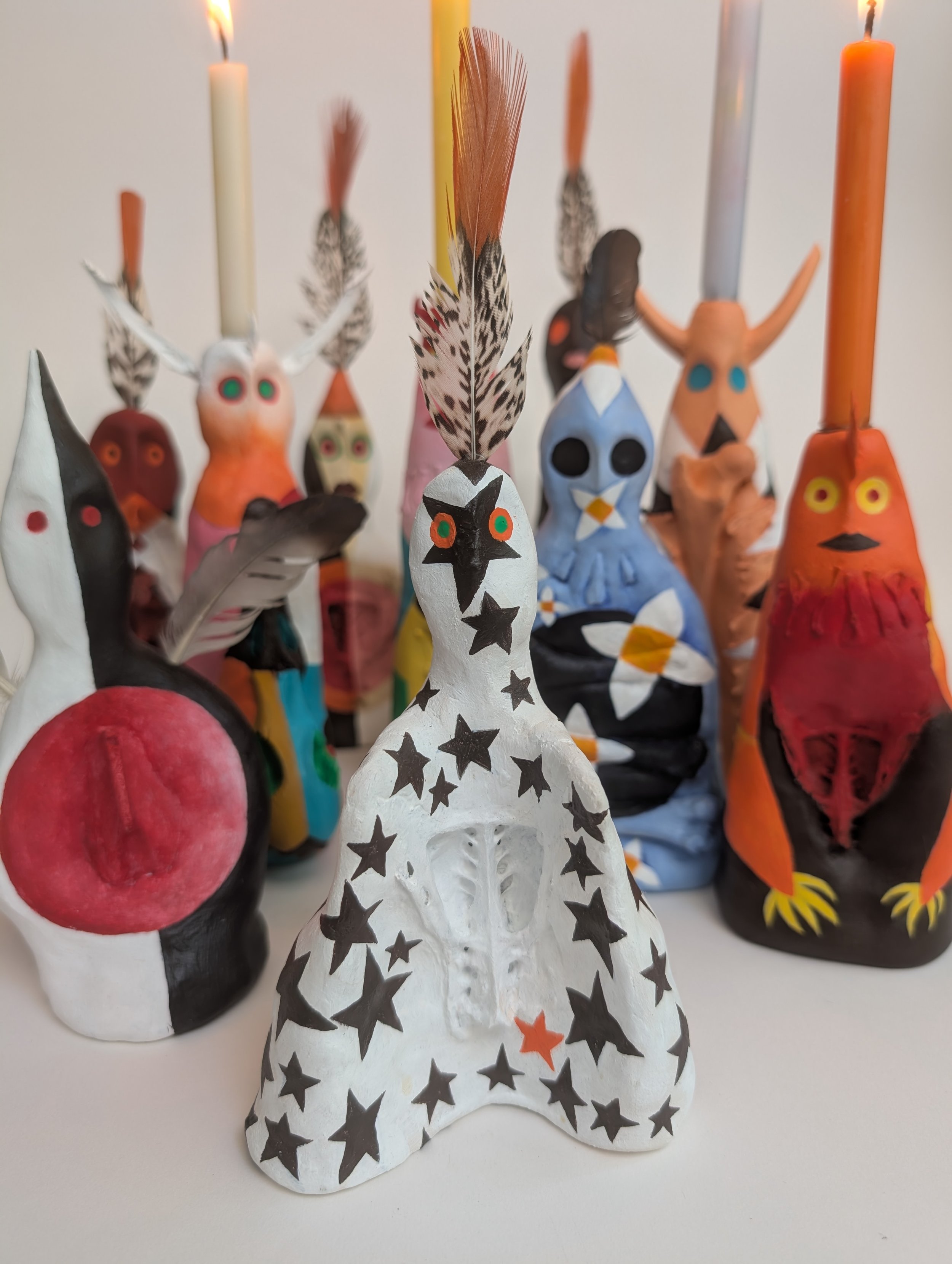
Jennie Cole, Brigid III
2026
Clay, foraged bone, feather, acrylic paint
23.5 × 9.3 × 8 cm
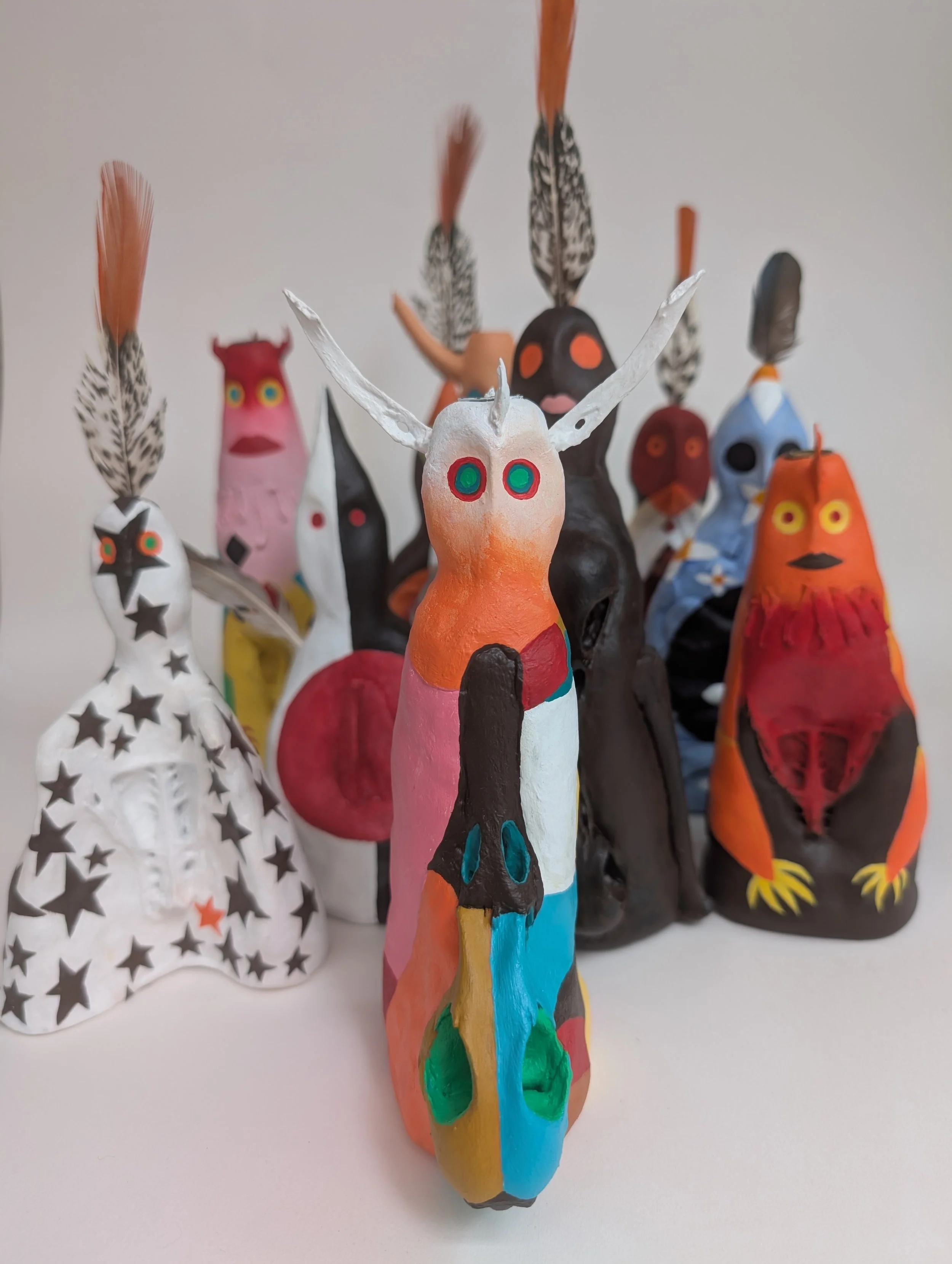
Jennie Cole, Brigid IV
2026
Clay, foraged bone, brass, acrylic paint
19 × 5 × 8.5 cm
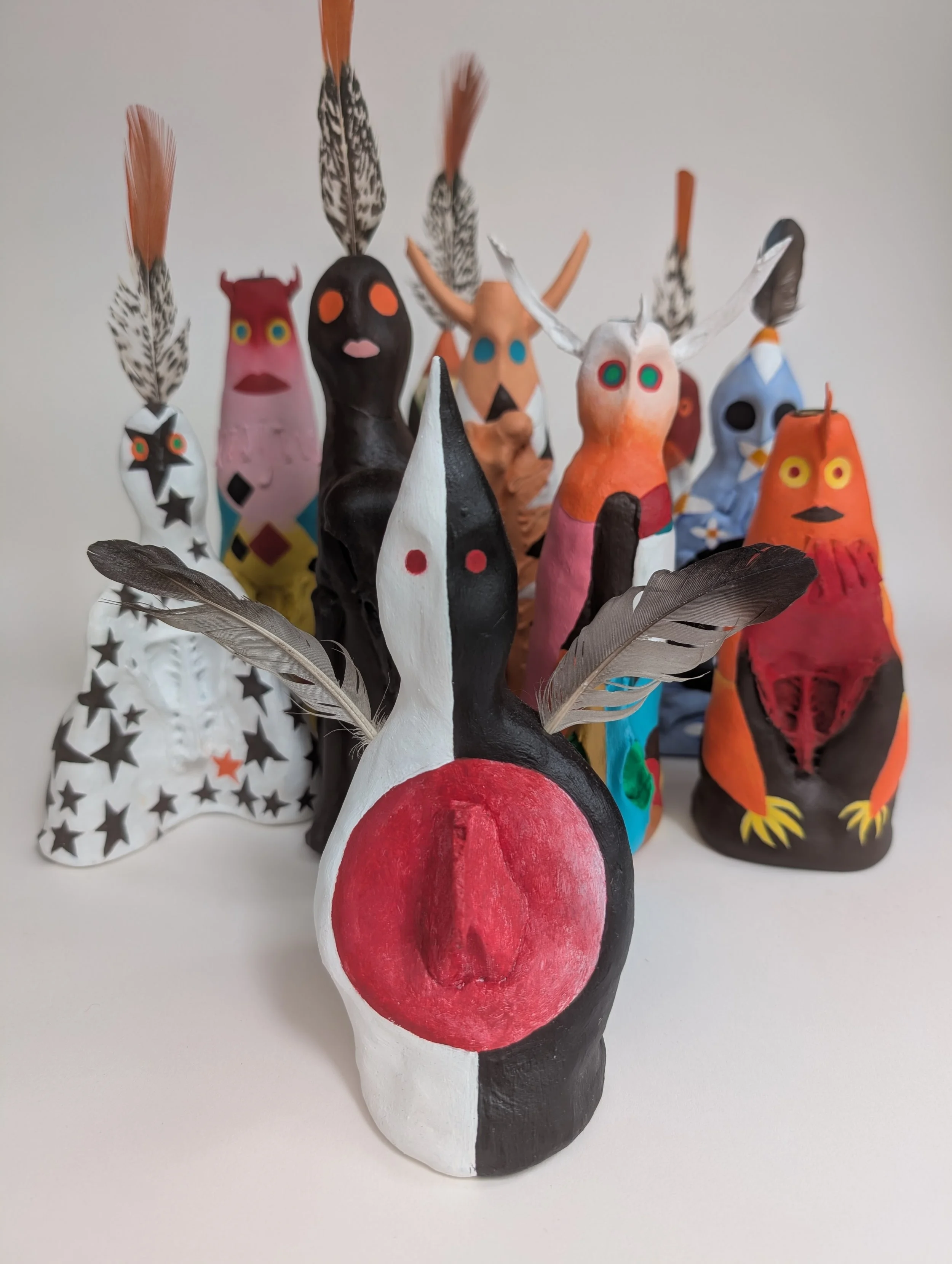
Jennie Cole, Brigid V
2026
Clay, foraged bone, feather, acrylic paint
15.6 × 16 × 7.7 cm
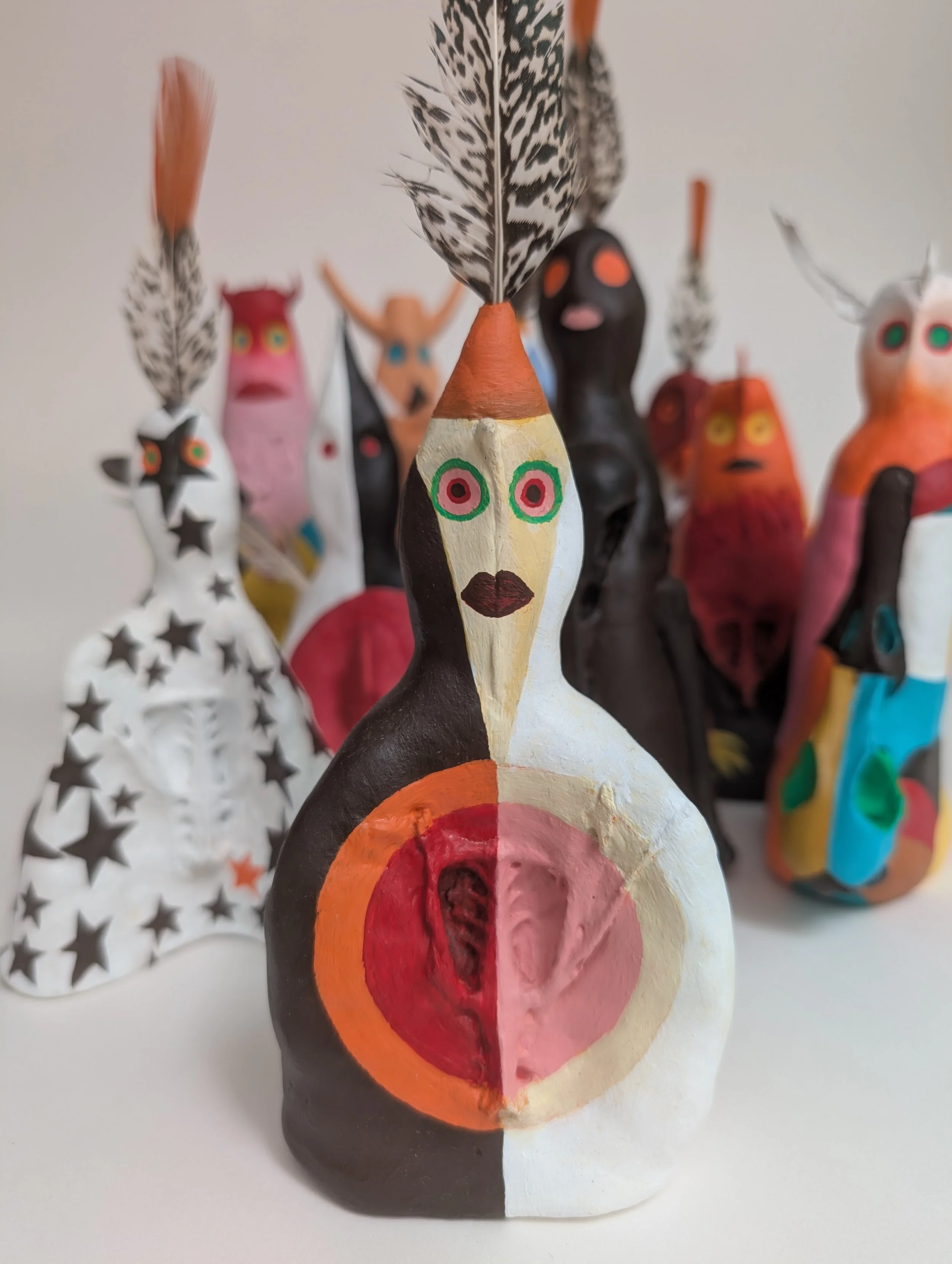
Jennie Cole, Brigid VI
2026
Clay, foraged bone, feather, acrylic paint
28.3 × 8 × 5 cm
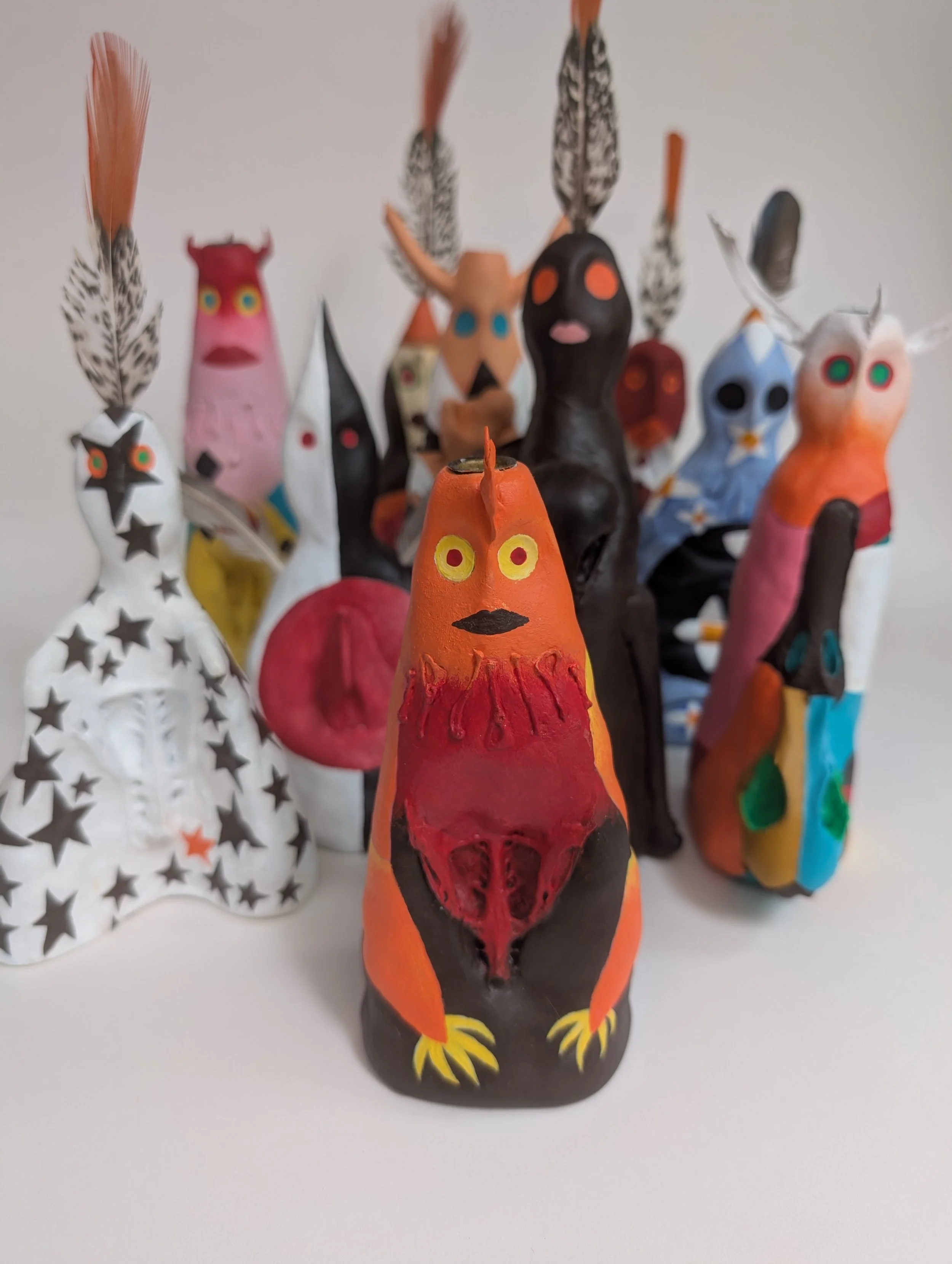
Jennie Cole, Brigid VII
2026
Clay, foraged bone, brass, acrylic paint
14.7 × 6.6 × 5.2 cm
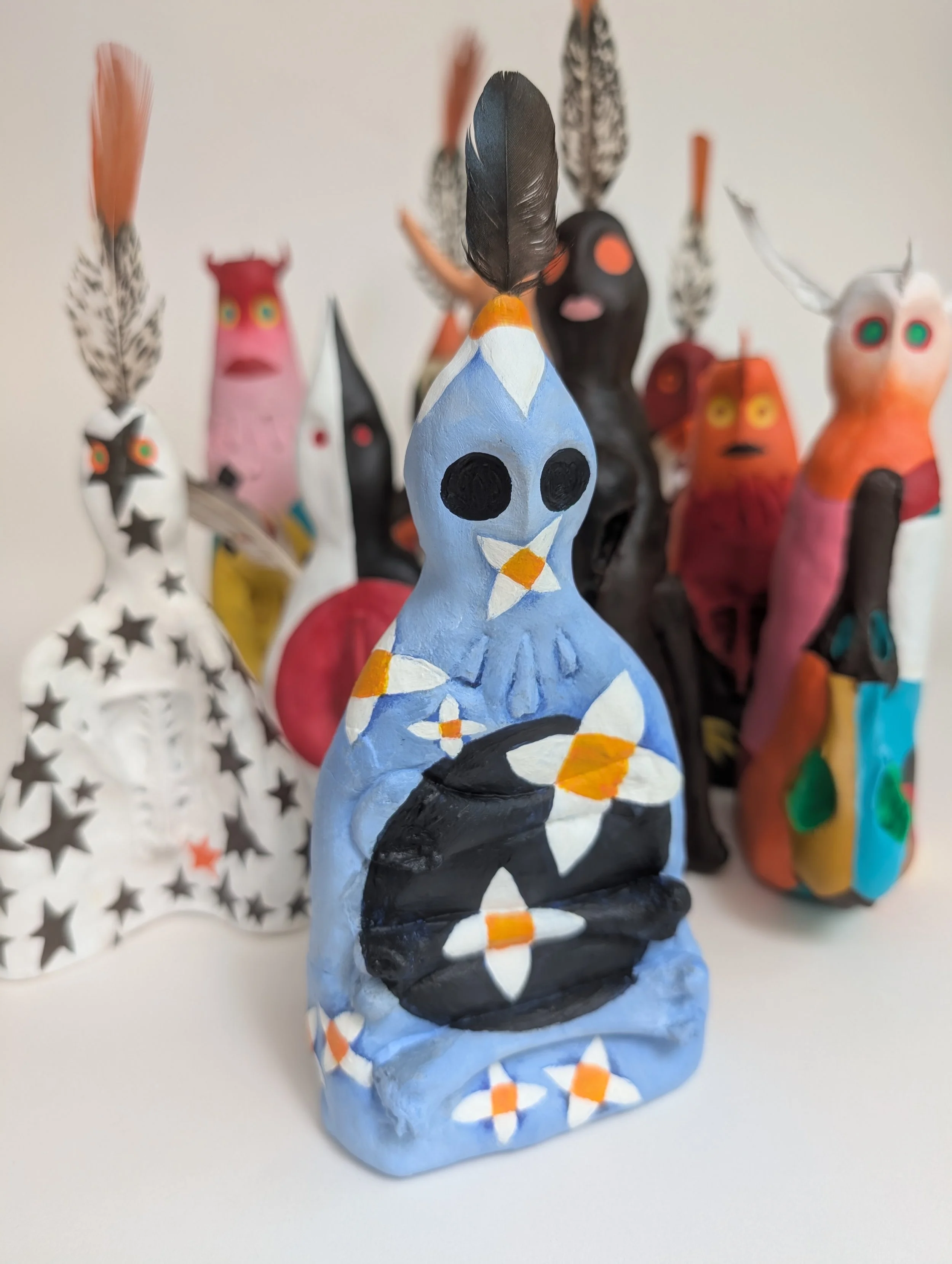
Jennie Cole, Brigid VIII
2026
Clay, foraged bone, feather, acrylic paint
19.5 × 8.5 × 4.5 cm
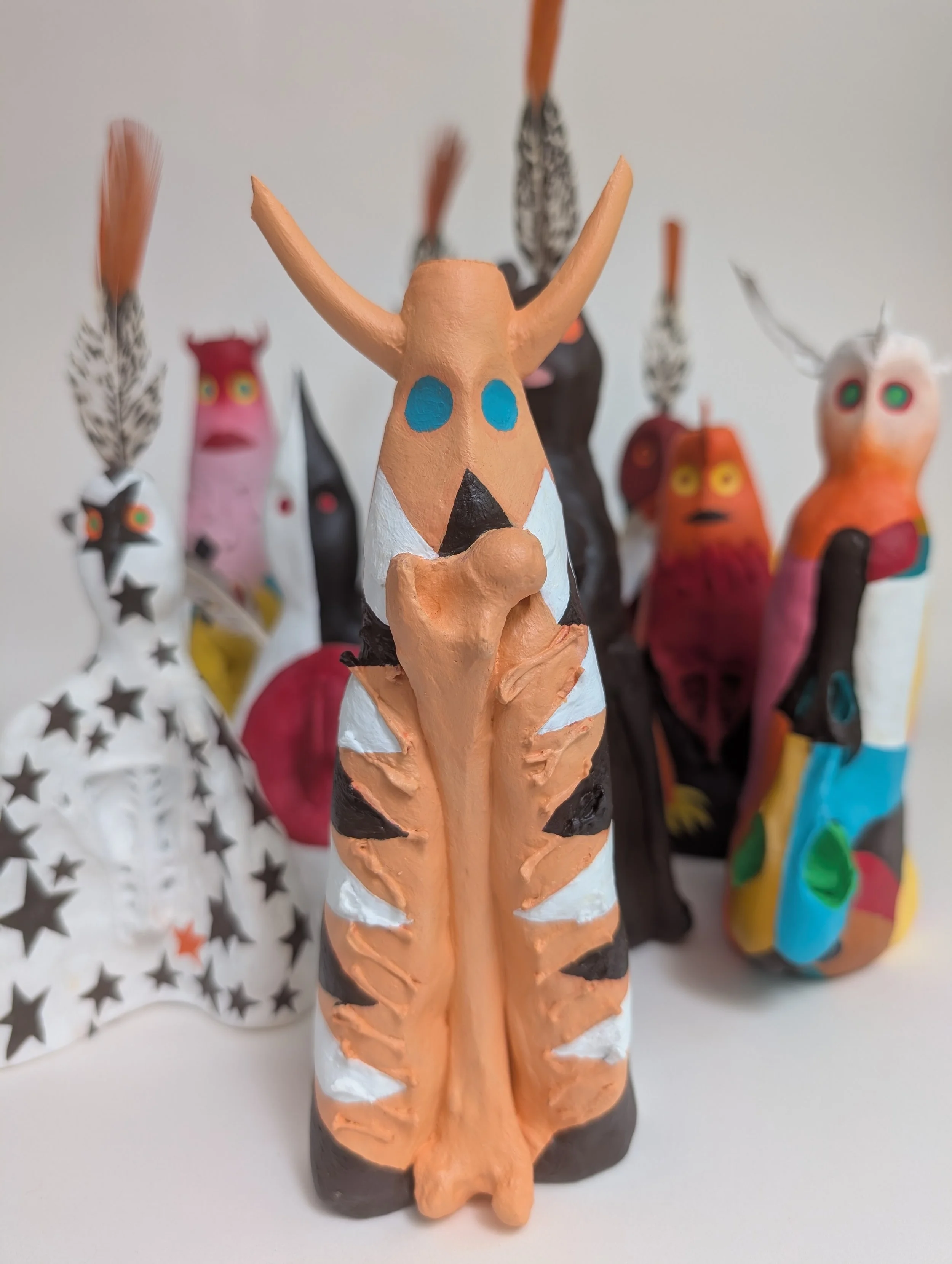
Jennie Cole, Brigid IX
2026
Clay, foraged bone, brass, acrylic paint
19 × 6.7 × 5.7 cm
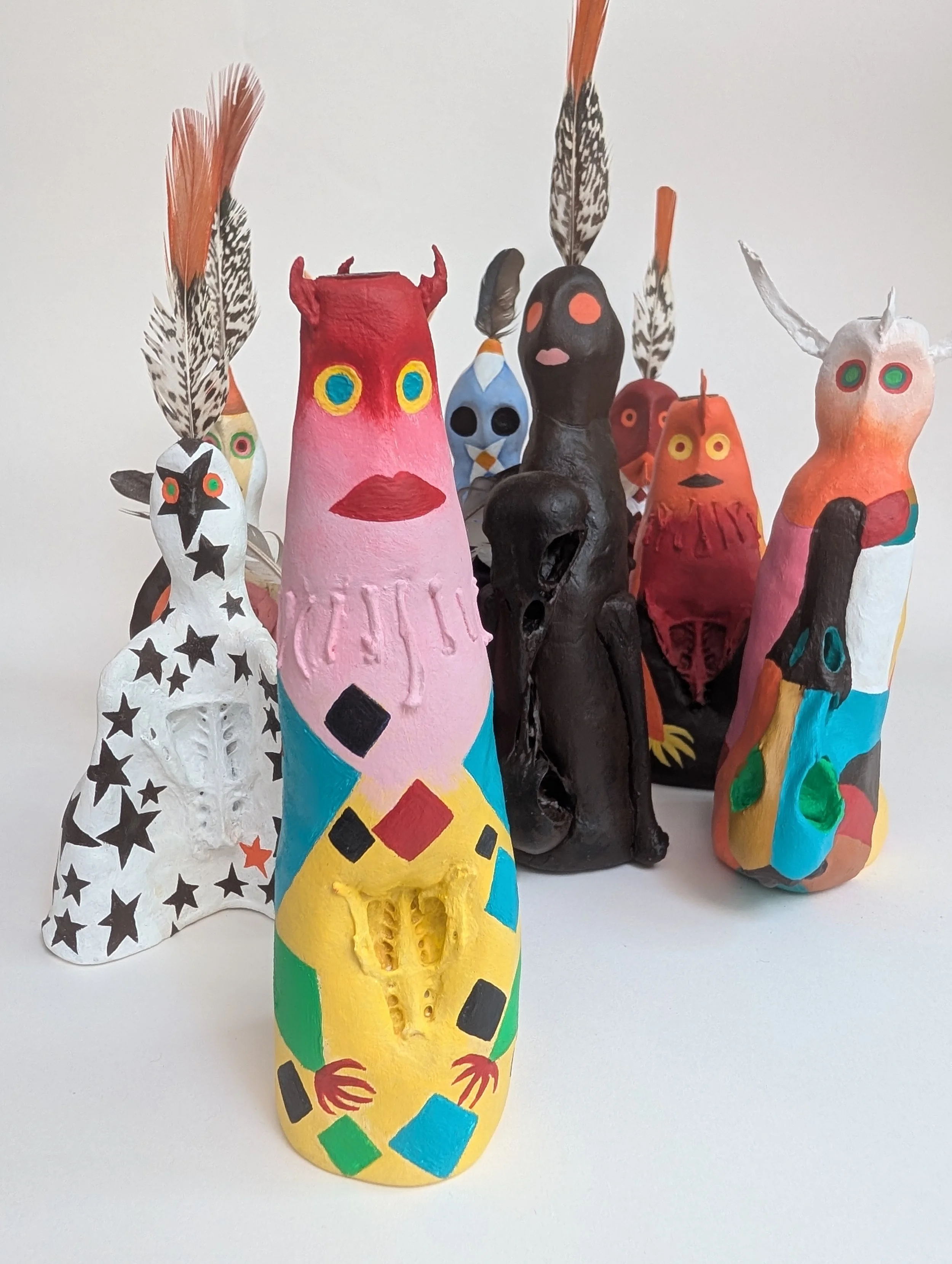
Jennie Cole, Brigid X
2026
Clay, foraged bone, brass, acrylic paint
17.5 × 5.5 × 5.5 cm